
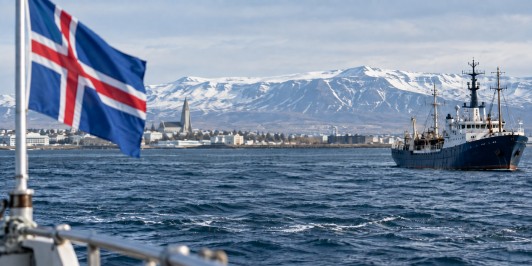
Iceland is preparing to enact legislation that would permanently outlaw commercial whaling, a significant step that would leave only Japan and Norway continuing the practice. The government plans to present this bill to parliament next February, aiming to establish a long-term ban after facing years of debate and resistance from animal welfare and conservation organizations. This move targets the country’s whaling activities, primarily focused on fin whales, a species classified as vulnerable.
During the current hunting season, which spans from June through September, dozens of fin whales have been captured under government-sanctioned quotas. The proposed ban has garnered the backing of animal welfare advocates who argue against commercial whaling due to ethical, environmental, and conservation concerns. Iceland’s decision to revisit its stance on whaling marks a pivotal moment in its environmental policy, reflecting growing global advocacy for marine life protection.
Iceland initially resumed commercial whaling in 2006, two decades after an international moratorium was set in 1986 to safeguard whale populations. Norway followed suit in 1993, while Japan exited the International Whaling Commission in 2019, resuming commercial whaling in its territorial waters and exclusive economic zone. Should Iceland’s legislation pass, it would leave Norway and Japan as the last countries engaged in commercial whaling activities.
The international moratorium on commercial whaling does not extend to indigenous communities, such as those in parts of Greenland and Alaska, who are permitted to hunt whales for nutritional, cultural, and traditional reasons. Iceland’s potential ban underscores a broader shift toward conservation and reflects the increasing pressure from international advocacy groups to protect marine ecosystems from commercial exploitation.