
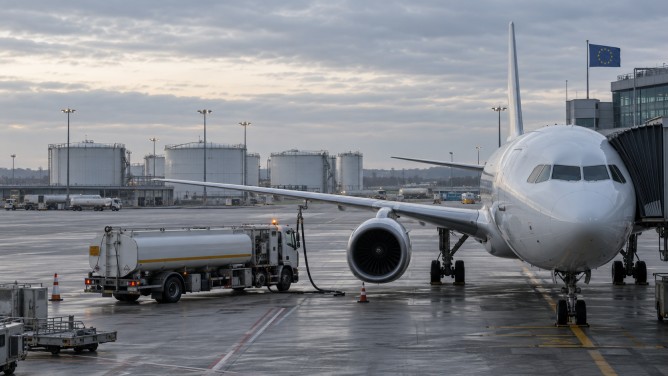
Europe is bracing for potential disruptions in jet fuel availability as the continent grapples with persistently low stock levels despite increased imports. Analysts predict a shortfall of approximately 510,000 barrels per day throughout the fourth quarter, leading to possible constraints for airlines and broader economic impacts.
The region’s jet fuel reserves in key hubs like Amsterdam, Rotterdam, and Antwerp have plummeted to their lowest since 2016, reflecting a concerning trend even as imports from Asia and other global sources rise. In September alone, European imports from Asia surged to about 129,000 barrels per day. Additional contributions from countries like Canada, Nigeria, and the United States have provided some relief against immediate shortages.
Despite assurances from the Swedish Energy Agency that supplies of gasoline, diesel, and jet fuel remain stable, the agency acknowledged that aviation fuel could face short-term supply issues both in Europe and specifically in Sweden. This underscores the fragility of the current supply chain amid fluctuating market demands.
Compounding the issue, geopolitical tensions in the Middle East have disrupted global energy markets, exerting upward pressure on oil and gas prices across Europe. Recent attacks targeting energy infrastructure in Saudi Arabia have intensified these pressures, further complicating the supply dynamics for jet fuel and other petroleum products.
As Europe navigates these challenges, the interplay of geopolitical factors, market demands, and supply chain adjustments will be critical in determining the extent and duration of any potential jet fuel shortages in the months ahead.