
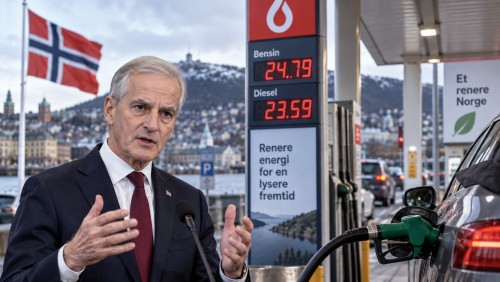
The economic strain on Norwegian households and businesses may soon see some relief as political momentum builds to cut fuel taxes amid soaring oil prices. Norway’s Prime Minister Jonas Gahr Støre faces mounting pressure from both political allies and opposition parties to address the rising fuel costs that have been squeezing budgets across the country.
The end of a temporary fuel tax relief on September 1 led to higher petrol and diesel prices, exacerbated by the global surge in oil prices. The Center Party, part of the government coalition, plans to propose reinstating the tax cuts when the Norwegian Parliament reconvenes in October. This measure, if passed, could lower fuel prices by approximately NOK 4.50 per litre, offering significant financial respite to consumers.
Support for the proposed tax relief spans across political lines. The Progress Party, alongside the Christian Democrats, backs the Center Party’s initiative and has urged the Conservative Party to lend their support as well. Progress Party leader Sylvi Listhaug emphasized the critical impact of high fuel costs on sectors like transport and construction, which heavily depend on diesel and petrol.
Inside the Conservative Party, there is a growing call for change, with over 60 local chapters reportedly advocating for reduced fuel taxes. This demand is particularly strong in regions with limited public transport options, where residents rely heavily on personal vehicles for their daily commute and activities.
Despite Norway’s prominent role as an oil producer and its shift towards electric vehicles, traditional fuel remains crucial for many industries and households. The current high fuel prices have even driven some Norwegians to seek cheaper options by crossing into Sweden. As the political debate intensifies, the outcome could significantly impact both the national economy and individual financial burdens.