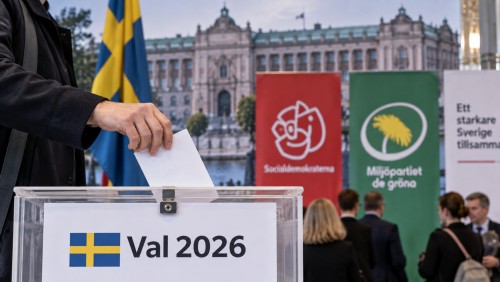
The shift in Sweden’s political landscape following the latest election results could lead to significant changes in the country’s governance. The red-green opposition has narrowly overtaken the Tidö parties, securing 176 seats in the Riksdag, compared to the 173 seats held by their rivals. This development positions the Social Democrats, who received the most votes, at the forefront of potential coalition discussions.
According to preliminary counts, the Social Democrats garnered 28.0% of the vote, translating to 99 seats, making them the largest party in the Riksdag. The Moderates followed with 19.8% of the vote and 70 seats. Meanwhile, the Sweden Democrats, despite capturing 17.5% of the vote, saw their representation decrease, securing 62 seats.
The election also saw shifts among smaller parties. The Left Party increased its presence, gaining six seats to hold a total of 30. The Center Party secured 7.0% of votes, resulting in 25 seats, while the Christian Democrats and the Green Party each acquired 22 seats, with 6.2% and 6.1% of the vote, respectively. The Liberals wrapped up the list with 5.3% of the vote and 19 seats.
Voter participation was notably high, with a turnout of 84.8%, slightly surpassing the 2022 election by 0.6 percentage points. As the final vote count is awaited, these preliminary results highlight the dynamic nature of Swedish politics, where even small changes in seat distribution can influence coalition possibilities and policy directions.
The outcome indicates a decline for both the Social Democrats and Sweden Democrats in terms of seat numbers, losing eight and 11 seats respectively compared to the previous election. As the political scene adjusts to these shifts, the final vote count remains critical, as it could alter the preliminary distribution of seats and further impact coalition talks.