
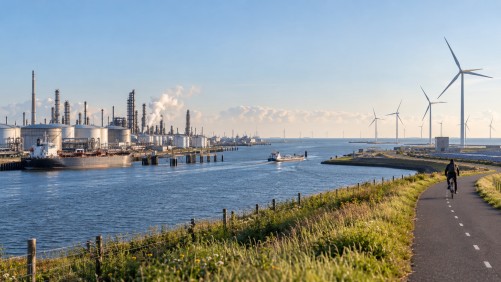
The Netherlands’ newly unveiled national roadmap for phasing out fossil fuels sets a significant precedent in the global fight against climate change, promising to guide the country’s transition away from oil, gas, and coal. This strategic plan, although lacking a definitive end date for fossil fuel usage, highlights the Dutch government’s intent to contribute actively to international climate efforts.
With the roadmap’s publication preceding the UN Climate Change Conference in Turkey this November, the Netherlands joins France in being one of the first nations to outline detailed plans for reducing reliance on fossil fuels. The Dutch government has committed to ending coal-fired electricity generation by 2030, a move that aligns with France’s target to cease coal usage by the same year. However, the Dutch plan scales back previous ambitions, such as reducing its offshore wind capacity and delaying the goal of a carbon-free electricity network by 2035.
Despite these adjustments, climate experts have welcomed the roadmap as a crucial step in defining the Netherlands’ long-term energy strategy. Yet, environmental activists have voiced concerns over the absence of a firm deadline for completely ending fossil fuel use, which they argue undermines the urgency needed to meet climate targets. The roadmap also indicates that the Netherlands may fall short of the European Union’s 2040 target for a 90% reduction in emissions.
The Dutch roadmap marks a significant moment in the country’s environmental policy, showcasing its determination to align with global climate goals despite some scaled-back targets. By setting these plans in motion, the Netherlands hopes to inspire other nations to take similar steps toward sustainable energy solutions. As nations convene for the upcoming climate conference, the Dutch strategy underlines the complex balance between ambition and practicality in the global transition to cleaner energy.