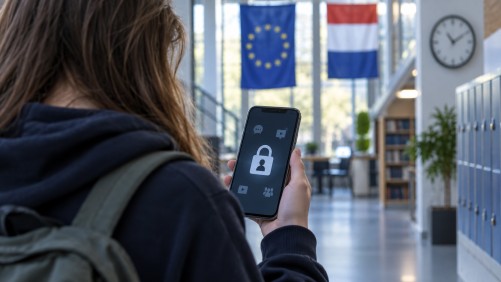
The push for a unified minimum age for social media use across the European Union could soon reshape how young people interact with digital platforms. The Dutch government, in collaboration with Spain, is advocating for a standardized minimum age of 15, aiming to align online safety measures with those in the physical world. This initiative seeks to implement consistent regulations throughout the EU, potentially altering the landscape of digital engagement for teenagers.
In a joint proposal to the European Commission, the Netherlands and Spain emphasized the need for privacy-focused age verification systems alongside the age restriction. This comes as individual countries have already begun setting their own regulations. For instance, Australia set a minimum age of 16 for social media use in December 2025, while France recently enacted a ban for users under the age of 15. The United Kingdom is planning to introduce similar restrictions for under-16s by 2027.
The European Commission is expected to propose measures to enhance child safety on social media as part of broader discussions on digital policy. Dutch Digital Economy Minister Willemijn Aerdts highlighted the importance of extending the same protections children receive offline to their online activities. However, the implementation of these measures is not without challenges, as concerns about the effectiveness and security of age verification methods have been raised.
Earlier this year, the European Commission released an age-checking application intended to bolster online safety, but it quickly faced scrutiny. A security researcher discovered a method to bypass the app, prompting the commission to issue an update to address the vulnerability. This incident underscores the complexities involved in enforcing age restrictions and ensuring the reliability of digital safeguards.
As the European Union considers these proposals, the question of how to balance privacy with effective age verification remains central. The outcome of these discussions could set new precedents for digital policy, influencing how social media platforms operate and protect young users across the continent. With the backing of countries like the Netherlands and Spain, the EU’s approach to online safety is poised to undergo significant changes in the coming years.